Friday, February 26, 2016

flower dessection

 Here is the male reproductive part of a flower, known as the stamen. It has a stalk called the filament coming up from the base of the flower and on top is the anther. This portion of the stamen produces and releases pollen grains that contain the sperm cells.


Flower dissection


Fertilization in a Brassica occurs when pollen (held on the anthers) from another plant is transported to another plant by the wind or insect. Once the pollen gets to another flower, it makes its way down to the carpel to the ovules located in the base of the flower.                                                    Here is a picture of the anthers of the flower. They are the male part and holds the pollen

Friday, February 5, 2016

Fertilization in a Brassica occurs when pollen (held on the anthers) from another plant is transported to another plant by the wind or insect. Once the pollen gets to another flower, it makes its way down to the carpel to the ovules located in the base of the flower. 


Here is a picture of the anthers of the flower. They are the male part and holds the pollen 


Here is the male reproductive part of a flower, known as the stamen. It has a stalk called the filament coming up from the base of the flower and on top is the anther. This portion of the stamen produces and releases pollen grains that contain the sperm cells.
Here is the male reproductive part of the flower, known as the carpel. The carpool has a style and on top of the style is the stigma that has a sticky tip that collects the pollen. 

Inside the base of the of the ovary is the ovules. Ovules are immature, unfertilized eggs. 

Tuesday, January 19, 2016

We are experimenting with a small sprout of Brussels sprouts. Our plant has three, thick leaves, and is fairly short. The offspring of this plant will appear exactly like its parent but different in its own little way probably in the way the leaves are arrange. The offspring would get its traits when the parent produces its seeds. When the seeds are planted the cells inside begins meiosis. They begin to divide and grow. Brassica oleracea pass their genetics through the seeds they produce.
Offsprings will look similar but not exactly the same, because they inherit the parents genetics, but the living conditions could be different. They have there own set of genetic code in each seed. If we were to grow them next to each other for several generations they may mix genetically.I believe that the ancestral plant for our plant was grown in sightly different areas and over time it began to evolve to fit with their surroundings.


Tuesday, December 15, 2015

 From our results, we can conclude that our hypothesis is correct. As we predicted, the cauliflower survived, while in the pot containing the weeds, the cauliflower suffered. We analyzed and watered each plant (with the same amount of water) over the course of two weeks. 

We can conclude that our original Cauliflower plants did die from competition with the surrounding weeds. 

Monday, November 2, 2015

Evidence

Evidence

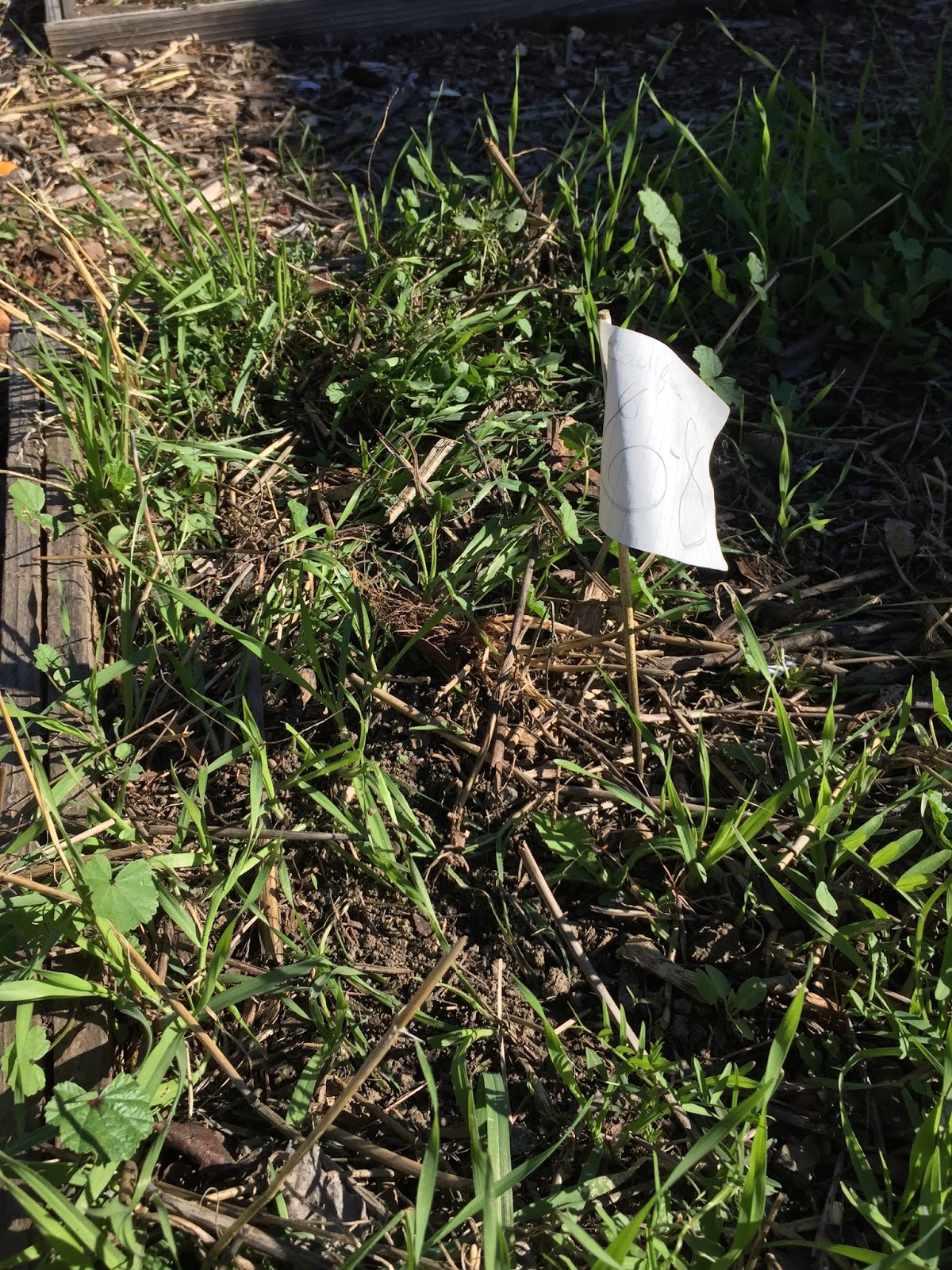
The soil where we placed our plant is covered
with grass and weeds.

The place holder is the only part left of where our plant should be. 
There are no visible remains of our plant,
the soil is occupied.
The flag is a memorial of sorts, dedicated to what our plant could've been.

Hypothesis

Problem Question: Why did our group's plant die?
The area where our plant should be is covered with grass and weeds, therefore we hypothesize that the water and nutrients that our plant needed to survive were consumed by weeds and other plants around it. Dependent variable: The lack of growth of our plant. Independent variable: What prevented the plants growth.

Leaf